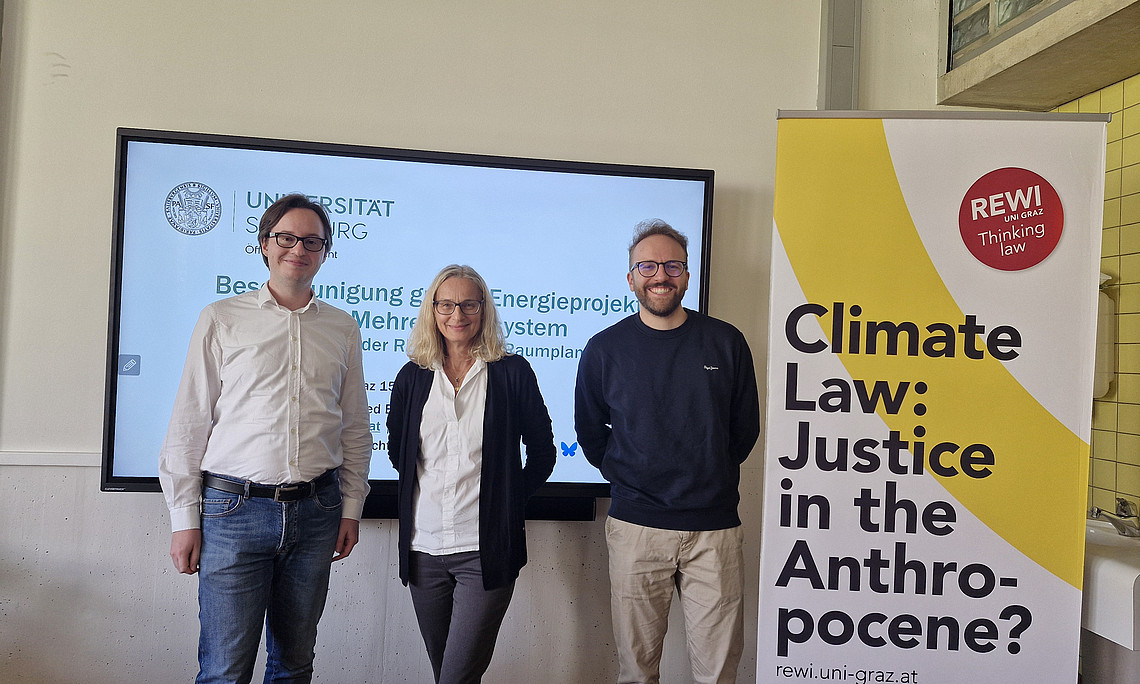



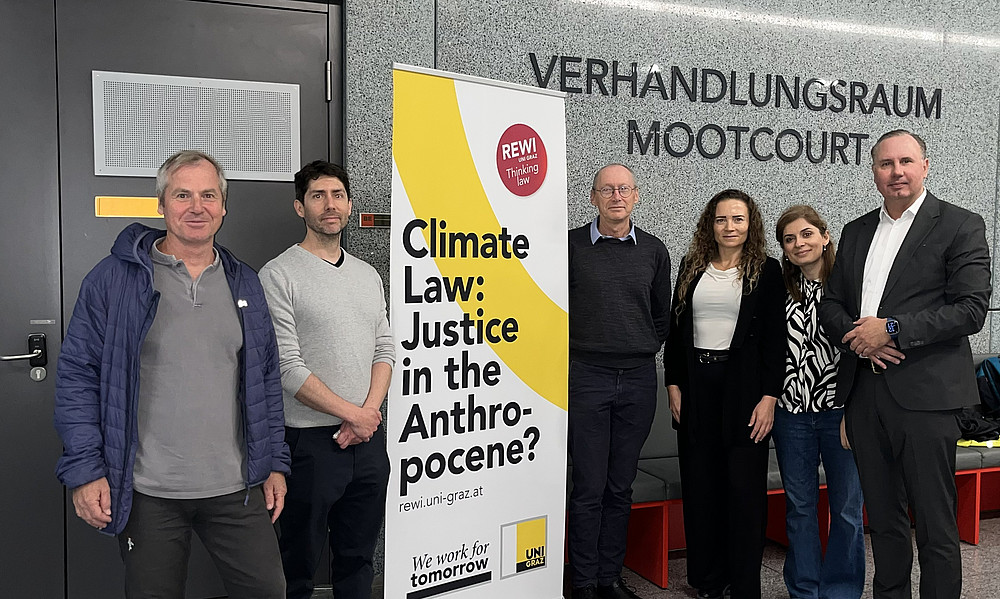
“How can scientific evidence of climate-related deaths inform legal responsibility?” This question was at the centre of the workshop, “Climate Mortality: A Legal Reality?”, held on 21 October 2026 at the University of Graz, organised by the Research Center for Climate Law (ClimLaw: Graz) in cooperation with the Climate Change Centre Austria (CCCA) and its Working Group on Climate Law. The event brought together perspectives from medicine, psychology and law. Atieh Khatibi, Research Project Assistant at ClimLaw: Graz, opened the workshop by highlighting the growing implications of climate change for human health and the right to life.
First, Dr Martin Sprenger, from the Medical University of Graz, examined how climate-related mortality is measured. He highlighted the use of statistical estimates, the difficulty of identifying climate change as a contributing factor in individual deaths, and important gaps in available data.
Furthermore, Professor Richard Parncutt, from the University of Graz, continued by looking at this topic from a semi-quantitative approach to estimating future premature deaths associated with greenhouse gas emissions. His contribution raised questions about how such estimates might inform debates on the responsibility of major emitters, while underscoring the importance of underlying assumptions.
Professor Nicolas Ojeda Zavala from the Universidad Autónoma de Chile, explored the legal implications of climate mortality from a Chilean perspective, drawing attention to the country’s varied climate risks, socioeconomic inequalities and evolving climate legislation.
Finally, Professor Oliver C. Ruppel, Director of the Climlaw: Graz, discussed emerging climate litigation and the potential relevance of the right to life to heat-related mortality. He also addressed legal challenges, including standing, causation and the scope of states’ duties to protect people from foreseeable risks.
The workshop concluded with a discussion moderated by Dr Marina von Harbach-Ferenczy (ClimLaw: Graz), focusing on climate justice, unequal vulnerability and the role of scientific evidence in legal proceedings. Across the contributions, a central question emerged: how can growing knowledge of climate-related mortality be translated into effective legal protection and public policy? This can be a good question to take home from this workshop.