



Against the backdrop of accelerating climate change, geopolitical instability, and mounting pressure on freshwater ecosystems, water security can no longer be addressed through adaptation, mitigation, environmental protection, and post-crisis restoration as separate legal agendas. With COP31 providing an important opportunity to strengthen the place of water within international climate governance, this paper develops the concept of a “restorative water-security nexus”, conceptualising restoration as a cross-cutting legal function connecting climate mitigation and adaptation with the protection, resilience, and ecological restoration of water systems. The nexus is operationalised through three interrelated dimensions-integrative, temporal, and scalar-and tested against Germany and the European Union, Ukraine, and Iran as deliberately contrasting case studies. These cases demonstrate how different forms of water insecurity-from regulatory fragmentation and structural scarcity to ecosystem degradation and conflict-related destruction-require distinct restorative responses while exposing common gaps across climate, water, and environmental law. The paper argues that hydro-resilience should be understood not merely as the capacity to withstand climatic shocks, but as a legally supported capacity to protect, adapt, recover, and progressively restore the ecological functions on which long-term water security depends. It concludes that common objectives for restorative water security should be combined with functionally differentiated implementation across governance levels, providing the basis for a glocal approach to hydroresilience that could inform water-related climate governance at COP31 and beyond.
Donnerstag, 22.10.2026
The Restorative Water-Security Nexus
Open book, hardback books on wooden table. Education background. Back to school. Copy space for text
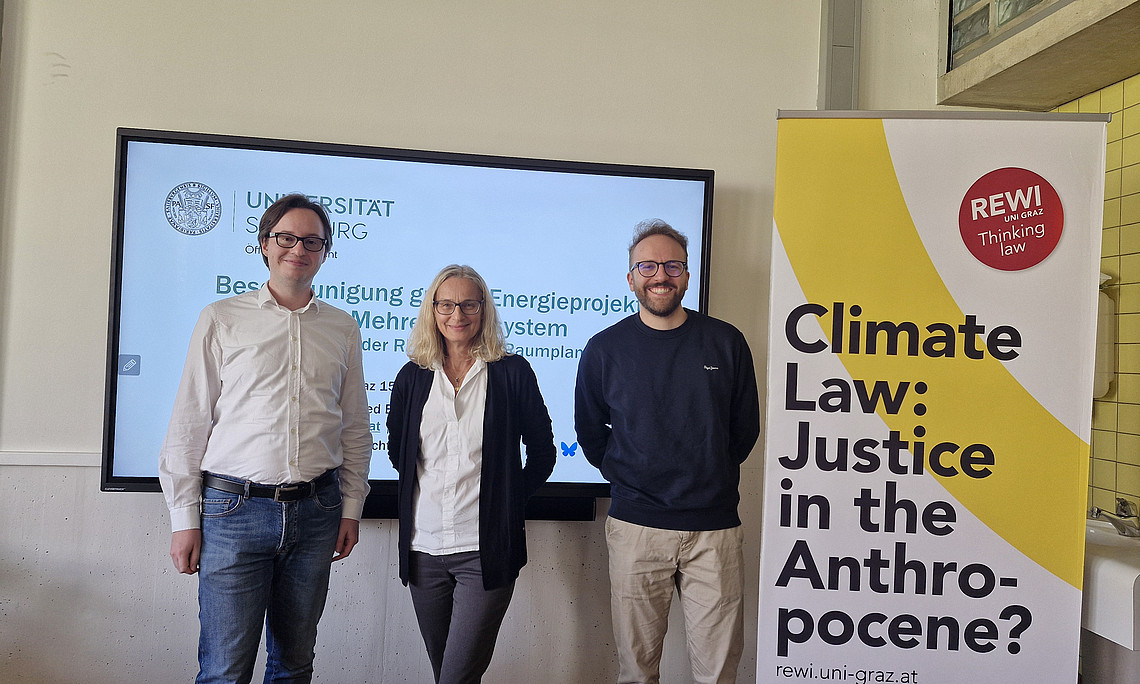
©Harald Schneider